
Why a Solid Top Guitar is Your True Starting Point: The Sub-¥1000 Acoustic Showdown
If you are about to embark on your musical journey, you are likely facing the ultimate beginner’s dilemma: What guitar should I buy for under ¥1000? For decades, the standard advice was to grab a cheap, durable laminate (plywood) guitar. But the acoustic guitar market has evolved. Today, we are putting three of the most popular entry-level acoustic guitars head-to-head: the legendary Yamaha F310, the budget-friendly Kepma D1C, and the disruptor of the market, the VEAZEN CLR300.
The spoiler? The era of overpriced laminate guitars is over. Here is why a solid top guitar like the VEAZEN CLR300 isn’t just a better deal—it is the only true starting line for a serious beginner.
1. The Core Truth: The Chasm Between Solid Top and Laminate
To understand why the VEAZEN CLR300 shines, you must understand the acoustic engine of a guitar: its top (soundboard).
-
Energy Transfer: A solid top guitar is carved from a single, natural piece of wood, allowing vibrations to travel with zero interference. Laminate guitars (like the Yamaha and Kepma) are made of multiple layers of thin wood pressed together with heavy glue. This glue acts as a sponge, absorbing vibrations and resulting in a muffled tone with poor sustain.
-
Dynamic Range: Solid wood is elastic and highly responsive. If you play softly, it whispers; if you dig in with a pick, it roars. Laminate wood is stiff, severely compressing your dynamic range and making it nearly impossible to express emotion through your playing.
-
Tone Evolution (The “Opening Up” Process): A solid top is alive. The more you play it, the more the wood fibers relax, causing the tone to become sweeter, richer, and louder over time. Laminate guitars are “dead” on arrival—their sound will never improve, and as the internal glue ages, the tone may actually degrade.
2. Meet the Contenders: Specs & Market Positioning
Let’s look at the three heavyweights dominating the sub-¥1000 market:
-
Yamaha F310 (Laminate | ~¥799 – ¥849): The old reliable. It relies heavily on decades of brand reputation. It is incredibly durable and insensitive to climate changes, but its acoustic performance is fundamentally bottlenecked by its all-laminate construction.
-
Kepma D1C (Laminate | ~¥609 – ¥699): The domestic budget king. It features clean, standardized manufacturing. It makes no acoustic promises but serves as a highly affordable entry ticket for those on a shoestring budget.
-
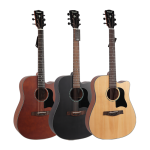
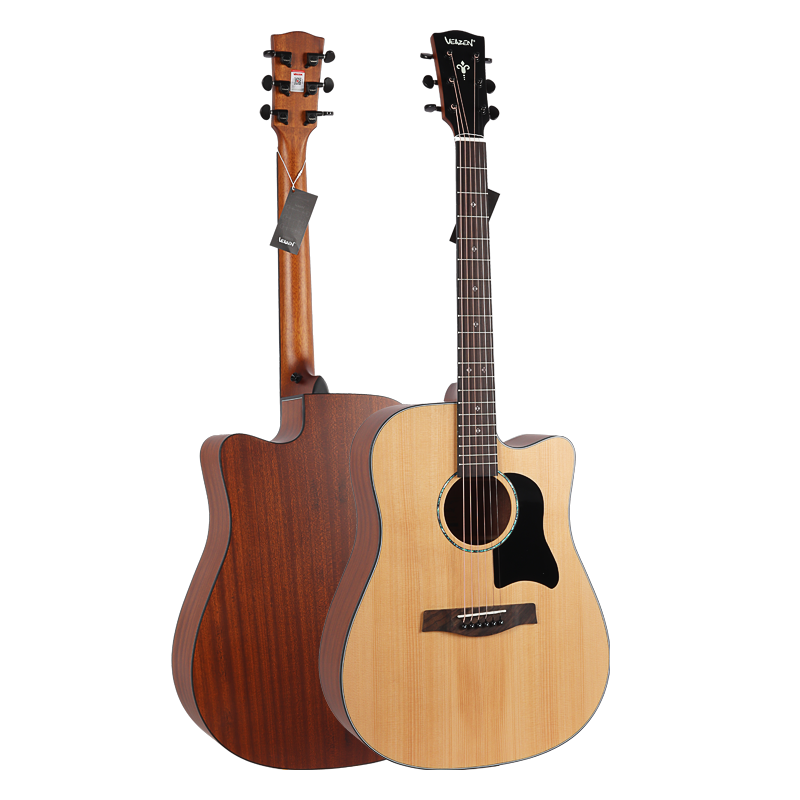
VEAZEN CLR300 (Solid Top | ~¥648 – ¥768): The dark horse. By introducing a real solid top to the sub-¥1000 price bracket, it executes a dimensional strike against its laminate competitors, offering professional-grade specs at an entry-level price.
3. Why the VEAZEN CLR300 is the Ultimate Value
The VEAZEN CLR300 doesn’t just win on paper; it wins in the hands of the player. Here is how it outclasses the competition:
-
Unmatched Tonewood: Featuring a Solid Sitka Spruce top, it boasts a superior strength-to-weight ratio. This translates to deep, resonant lows and crystal-clear, piercing highs that laminate guitars simply cannot reproduce.
-
Premium Detailing: While competitors use cheap plastic hardware, VEAZEN equips the CLR300 with a pure bone nut. Bone transfers string vibration into the neck far more efficiently, resulting in noticeably longer sustain. The meticulously sanded bridge also ensures that every strum rings out with complex, separated layers of sound.
-
Beginner-Obsessed Playability: A great sound means nothing if the guitar hurts to play. The CLR300 features an ultra-thin “C-shape” neck perfectly contoured for Asian hand profiles. Combined with rolled fretboard edges and a precisely calibrated, low factory action (string height), it offers a buttery-smooth, pain-free playing experience.
4. Brand Premium vs. Real Performance
When you buy a Yamaha F310, a significant portion of your money goes toward the logo on the headstock, global advertising, and massive dealer networks. It is a “safe but mediocre” choice. Kepma D1C strips away the premium, offering a bare-bones experience that matches its low price tag.
The VEAZEN CLR300 takes a different route. By minimizing brand markup, every penny of your investment goes directly into the acoustic performance of the guitar. It elevates the instrument from a mere “tool” to a genuine “musical instrument.”
5. The Final Verdict: Which One Should You Buy?
-
Choose the VEAZEN CLR300 IF: You want a guitar that will grow with you. If you plan to stick with playing, take exams, or perform, this is the undeniable best choice. It offers the best tone, the best feel, and the highest ceiling for musical growth.
-
Choose the Yamaha F310 IF: You care deeply about brand names, live in extreme/harsh climates, and have zero intention of maintaining or humidifying your guitar. It is a sturdy tool, but acoustically limited.
-
Choose the Kepma D1C IF: Your budget is extremely tight, and you are just looking for a short-term trial to see if you even like holding a guitar before committing.
Conclusion
The industrial logic of selling expensive laminate guitars to beginners is officially outdated. Solid top guitars are now beautifully accessible. By providing exceptional playability and a rich, inspiring tone, the VEAZEN CLR300 defends the acoustic baseline for beginners. That positive auditory feedback is the ultimate secret to staying motivated, preventing you from quitting due to a poorly made instrument, and ensuring your musical journey is a lifelong joy.